Picture this. Two fathers stand with their children on their shoulders at an airport in the US. The boy on his father’s shoulders’, wearing warm jacket on his back and a kippah on his head, holds a sign saying: “Hate has no home here.” His father, a rabbi, has a sign which reads “We’ve seen this before. Jews against the Ban.” The other man holds his daughter on his shoulders, her pink sweater and black hijab, mark her as sweet and different. Her sign, simple yet powerful says Love, while her father’s says empathy in capital letters. These two children, 7 year old Meryem and 9 year old Adin, had their picture taken at Chicago’s O’hare airport at a demonstration on Monday. In the photo the children and the fathers are seen smiling at one another, and in an interview with CNN, they told the reporter they had just been discussing the similarities between Hallal and Kosher dietary laws. I would like to allow us a moment to bask in the light of this picture. Two muslims and two Jews smiling at one another, bringing a little bit more light into the world. This picture and its viral reception this week, helped to remind us that even when it seems like the world is darkened by hatred, there is still hope and light in the world. Light exists all around us, even when it is difficult to see. Our tradition reminds us that it is possible to find light in a darkened world, to uncover light in our lives even when it seems nearly impossible, and to bring light to others and the world.
In this week’s parasha, Bo, we are thrust into the worst of the 10 plagues, the plague of darkness and the killing of the first born. In Exodus 10:21-23, we read about God’s command to Moses to stretch out his hand to created darkness over the land of Egypt. The darkness lasted for three days and during that time, we read that “the Egyptians did not see one another, nor did they rise from their place for three days; yet all the children of Israel had light in their dwellings.”
What does it mean that the Egyptians’ experienced darkness and yet the Israelites were able to continue to kindle light in their homes? Chiddushei HaRim, a 19th century Hasidic rabbi, wrote that “There is no greater darkness than one in which “a man did not see his fellow”—in which a person becomes oblivious to the needs of his fellow man. When that happens, a person becomes stymied in his personal development as well— because we read “nor did anyone get up from his place.” The Egyptians were experiencing the darkness they had created in their world, in turn they were unable to really see each other’s humanity or to stand up for what was right. The Israelites, on the other hand, had hope, they had light. In the darkest hour of their lives, when darkness literally pervaded the world in which they lived, the Israelites were able to see one another, to find connection, to see the needs of the person sitting in front of them.
Even though the story of the Israelites at their darkest moment reminds us that it is possible to find light in the world, it is often very difficult for each of us to uncover the light in our lives when we are impacted by personal tragedy or hardship. In these moments, we often cannot find light on our own. There is a story told of the Baal Shem Tov, a great Hasidic rabbi of the 19th century, who once was celebrating Shabbat with his students when all of a sudden he told them to leave his home and walk with him. They walked for a very long time until they came to another neighboring village. The Baal Shem Tov called all of the Jews out to the square, but he knew there was one family missing, the bookbinder and his wife.
When the bookbinder was finally found, the Baal Shem Tov’s students asked the man why he hadn’t come out. The old man glanced fearfully at the illustrious students of the Baal Shem Tov and began to speak. “I am an old bookbinder. In my youth, I could earn enough money that we had what we needed during the week, and something special to greet Shabbat. But as I have grown older, there has been less and less. This Shabbat–for the first time–we had no Shabbat candles–and only a few crusts of bread for dinner. My wife was determined that we would observe Shabbat as well as we were able. And so, just before sundown, she went through the motions of lighting candles that were not there. As she did, I saw…a flash of light. And I understood for the first time that the light that I had thought came only from the candles was also coming from her.”
At the lowest points in our lives, we often have the most difficulty finding and pinpointing light in our lives. Sometimes, in those moments, we cannot simply look out into the world and see the beauty that pervades it. Instead, sometimes we have to look to our loved ones, to see the light that they bring to us in our darkest moments.
When we can move past darkness and towards the light that exists in the world, we can begin to help others to see and experience light in their own lives. After encountering God on Mt. Sinai for forty days and forty nights, ten commandments in hand, Moses made his way off of the mountain and towards the people. At that moment
Moses did not know that his face shone with beams of light. After encountering God face to face, Moses descended the mountain, to be in relationship with the Israelites. Moses’s face, we are told gave off light because he needed to connect with the Israelites as he brought down the second set of tablets, following the incident with the golden calf. In this instance, Moses needed to bring light to the people, to remind them that even after they had fallen short, there was still light and love to be found in the world.
While we seek to emulate Moses in our lives, to bring light to other people, Moses’ experience on Sinai was once in a lifetime. He was able to bring the light of God to the Israelites, but how could we ever manage to reach his level? How can we bring light to others in our own lives today? Well, I’d love to tell you a story. In this story long ago there was king who had three sons. The king was growing older and did not know which of his sons should succeed him. The king wanted his smartest son to be the new king, but the problem was, he loved all of his sons very much, and he did not really know which one was the smartest.
One day, the king thought of a way to figure out which of his sons was the smartest. He called his three sons into his room and told them: “Under the palace is a big empty room that is never used. I am going to make a contest that is going to put that room to use. “The contest will be as follows: Each one of you will have thirty days to fill the room with something. Your goal will be to fill the room to its fullest potential. You can fill the room with anything you want. At the end of the thirty days, there should not even be an inch of the room that is left empty. “Whoever fills the room the most,” said the king, “will become king when I pass away.”
The three sons left the king’s room. The oldest son was given the first chance to fill the big room, and he got to work. The oldest son filled the room with stones, big ones and little ones until the room was filled to the brim. It took a while until the room was finally full. Soon the thirtieth day came, and it was time for the king to check the room. The king was very happy to see how full the room was. Of course, there were still tiny spaces between the rocks, but it was still very full. The king said: “Son, I am very proud of you. The room is very full, and even though there are still spaces between the rocks, you did a wonderful job.”
The room was emptied, and now it was the second son’s turn. The second son filled the room with feathers. The thirtieth day came, and the room was full. The king came to check out the room. When he opened the door, feathers started flying all over.
The king said: “I see that you did something very smart, and worked very hard. But, there are still some small spaces that can be filled.” Now that the king had seen the room, it was once again emptied, and the third son started thinking about what he would fill the room with.
Everybody was curious to know, with what would the third son fill the room? Well, the first day passed, and it seemed as if he had not yet decided. The second day, too, he did not say anything. The next few days passed as if there was no contest going on. Everybody was wondering, why wasn’t the third son filling the room with anything?
The thirtieth day came, and still, the room was empty. Everybody was wondering, how did the youngest son expect to fill the room? He only had a few hours left! Towards the end of the day, the youngest son came out of his room with a small box in his hands. Was he going to fill the room with whatever was in that box? The room probably would not be too full then! He then went into the big room and closed the door behind himself.
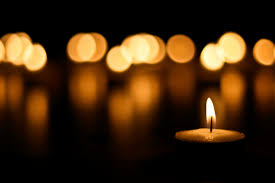
At the end of the day the king came to check the room. When he opened the door, he smiled. There was his son, holding a lit candle in his hand. He had filled the room with light. The king said: “My son, you are the wisest of all. You will be the next king of this country.”
We each have the power to fill a room with light. We each have our own inner light to share, to give to another person. More importantly, we each have the ability to act as leaders to bring light not only to those who are with us on a daily basis, our family, friends, and community members, but also to the world. Like Adin and Mereyem and their parents standing with signs, signs filled with love and a rejection of hate, smiling faces of four people who were truly able to see one another, we also have this power. We can like the Israelites find a way to see the light that exists within each of us. Morevoer, even at our darkest hour, there are those in our lives who can bring light to us, to show us that a candle can still burn in the darkness inside of us. We are so very capable of bringing more light into this world, by really listening to those with whom we agree and disagree and finding compassion and love for our neighbor no matter how different we may be, lending a helping hand, volunteering, or simply being there, and so much more.
Sometimes it is easy to get swallowed up by the darkness that seems to creep more and more into the world in which we live. And, yet, I’m reminded that each one of us has the ability to see light in another person, to find hope and joy in spite of fear. Just as it is our responsibility to stand up for injustice, so too is it our responsibility to find light and joy in the darkness, to light up the world through our connection to one another and the love that connects us. This Shabbat may we find the strength to see the light that exists in our lives and find new ways to bring light to those we love, and to all the world.
Shabbat shalom.
(Sermon given at Oheb Shalom Temple in Sandusky, Ohio on February 3, 2017)

 Rabbi Bailey Romano